

Zoetis A.L.P.H.A. initiative teams up with veterinary innovation specialists from the University of Surrey to help reduce prevalence of diseases and improve productivity for African farmers
Zoetis’ African Livestock Productivity and Health Advancement (A.L.P.H.A.) initiative is working with The Veterinary Health Innovation Engine (vHive) – an innovation hub situated at the University of Surrey’s School of Veterinary Medicine – on a series of projects to help improve productivity for sub-Saharan African farmers and reduce disease prevalence across Ethiopia, Nigeria, Tanzania and Uganda.
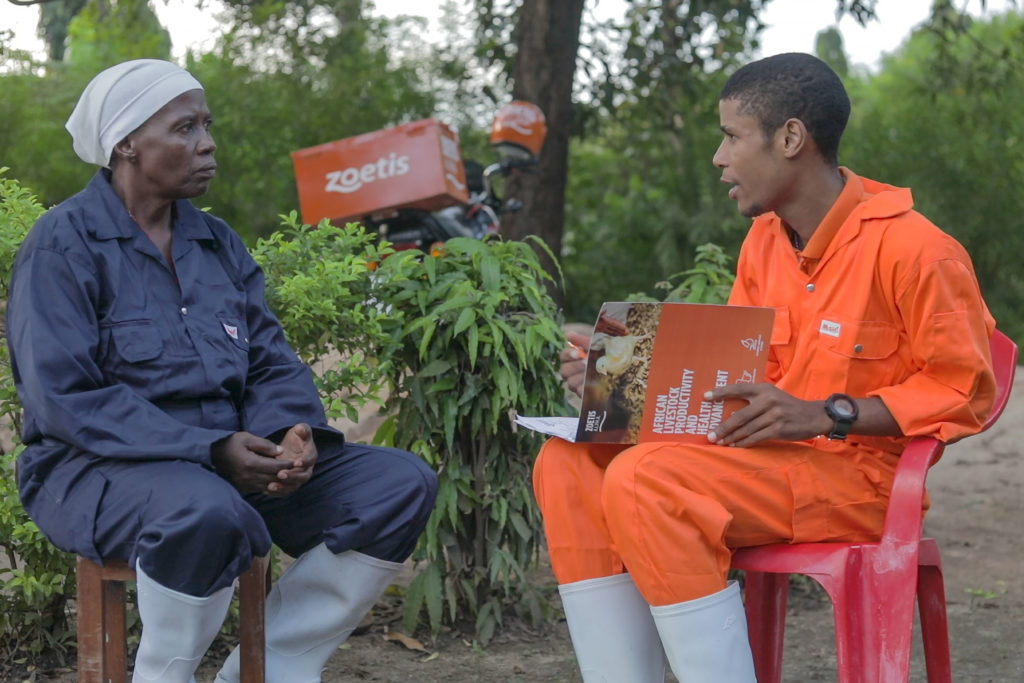
Farmers can now get access to the products and advice they need to administer the products from trained professionals during home visits 
Farmer Theopista Joseph says the A.L.P.H.A. initiative is beneficial because farmers are trained at home through visits
“The livestock sector in sub-Saharan Africa is faced with complex challenges, including the limited availability of well-trained and skilled animal health professionals, who are one of the most critical requirements for optimal veterinary service delivery,” said Gabriel Varga, commercial director for Africa at Zoetis. “We know we can’t solve all those challenges on our own and over the past three years, we have worked with several partners to deliver different aspects of the A.L.P.H.A. initiative. One of those partners is the vHive team and we’re delighted to be able to harness their skills and experience to our own.”
At vHive we are dedicated to the development and adoption of new digital technologies in animal health. We are delighted to be working with Zoetis in the A.L.P.H.A. initiative, supporting its aims in sub-Saharan Africa through academically verified output and bespoke business development,” said Prof. Alex Cook, Head of vHive, Vet School, University of Surrey. “We are working together on several exciting projects that will help to develop the livestock sector.”
Among the joint projects is one to identify and prioritise areas for training of veterinarians, initially in Ethiopia, and then in Uganda, with the goal of addressing the skills gaps among practicing animal health professionals and enhancing the delivery and governance of veterinary services.
The joint initiative has also involved assessing the antibiotic prescription habits of veterinarians and para-veterinarians in Nigeria with the aim of identifying and reducing the overuse or misuse of antibiotics in animal health.
The University of Surrey has been involved in early stage field tests of portable animal disease devices as well. “Improving diagnostic capabilities is a key goal of the A.L.P.H.A. initiative,” explained Varga. “An improved, and sustainable diagnostics network will help veterinarians and farmers identify diseases accurately and quickly so that they can take the appropriate steps and improve health and productivity levels of livestock in the short, medium and long term.
“We are now into the fourth year of the initiative and are always keen to expand the partners we work with – including integrators, agents, governments and the private sector – as we continue to drive the initiative forward,” he added.


No Comment